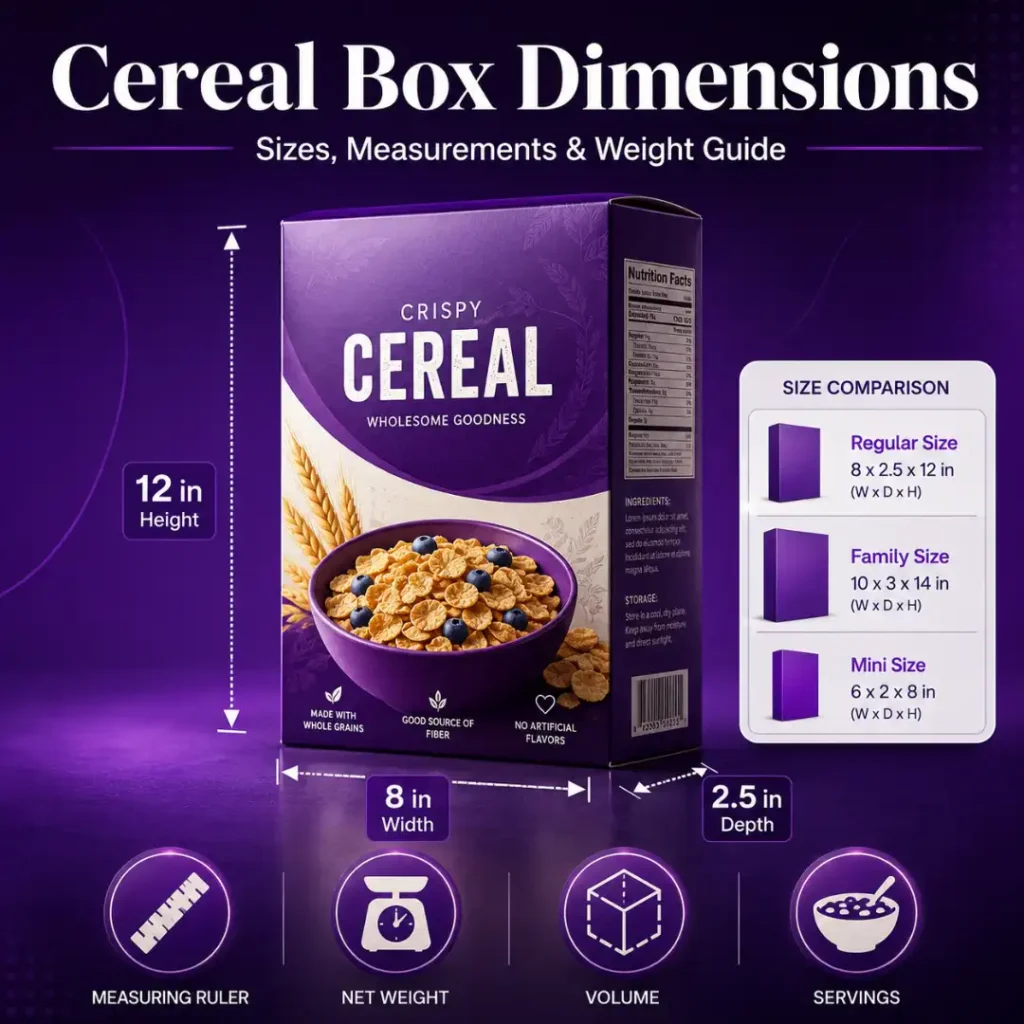

Before ordering custom printed boxes, one of the most important details you need to understand is how box dimensions are listed. A small mistake in size can lead to loose products, crushed items, higher shipping costs, poor print alignment, or packaging that simply does not fit.
In the packaging industry, dimensions are usually listed in a specific order: Length × Width × Height, often written as L × W × H. This standard helps packaging companies, manufacturers, designers, and customers speak the same language when creating custom packaging.
For business owners, e-commerce sellers, product manufacturers, and packaging buyers, knowing how dimensions work can save time, money, and frustration. Whether you are ordering mailer boxes, corrugated boxes, folding cartons, or retail product packaging, accurate box size measurements help ensure your packaging protects the product and looks professional.
This guide explains everything in simple terms so you can measure correctly and order custom printed boxes with confidence.
What Does Box Dimension Mean?
Box dimensions describe the size of a box. They tell the manufacturer how long, wide, and tall the finished packaging should be.
In simple words, box dimensions answer one basic question: how much space does the box provide for the product?
For example, if a box is listed as:
10 × 8 × 3 inches
That usually means:
- 10 inches long
- 8 inches wide
- 3 inches high
These measurements help decide whether your product will fit inside the box, how much protective space is available, how the box will be printed, and how it will be shipped or stored.
In custom packaging, dimensions are not just numbers. They affect the structure, material choice, printing layout, shipping cost, and customer experience. That is why professional packaging companies always ask for accurate dimensions before moving into dieline creation, sampling, or production.
How Are Dimensions Listed in Packaging?
In most packaging projects, dimensions are listed in this order:
Length × Width × Height
This is the standard industry order for box dimensions. You may also see it written as:
L × W × H
The order matters because each measurement describes a different side of the box. If the numbers are mixed up, the box may be manufactured in the wrong shape.
For example:
12 × 8 × 4 inches is not the same as 8 × 12 × 4 inches.
Both boxes may use similar measurements, but the opening, layout, printing panels, and product fit can be different. This is especially important for custom packaging, where every panel is designed around the product and brand artwork.
Understanding Length, Width, and Height
To measure a box correctly, you need to understand what length, width, and height mean.
Length
Length is usually the longest side of the box opening. When you look at the box from the top, the length is the longer horizontal side.
For many packaging boxes, length runs from left to right across the front or main panel. In a mailer box, for example, the length is often the longest side of the base.
Width
Width is the shorter side of the box opening. It is measured from front to back when looking at the box from above.
Width is sometimes confused with depth, especially in retail packaging. In most packaging conversations, width describes the side that works with length to create the opening area of the box.
Height
Height is the vertical measurement from the bottom of the box to the top. It tells you how tall or deep the box is once assembled.
For a folding carton, height may describe how tall the product stands inside the box. For a mailer box, height often describes the depth of the box from the base to the closed lid.
How to Measure a Box Correctly
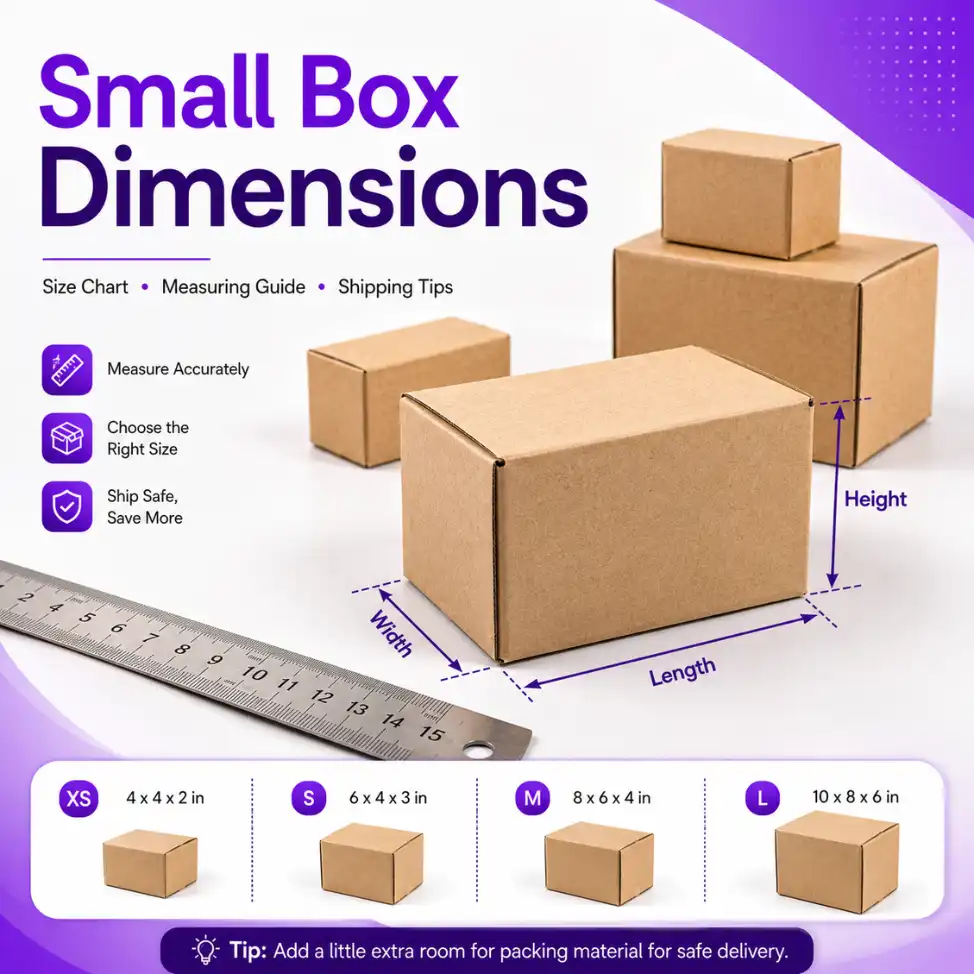
Measuring a box correctly is simple when you follow the right process. The key is to measure in the same order every time: Length × Width × Height.
Step 1: Place the Box in Front of You
Put the box on a flat surface. If the box is already assembled, place it in its normal position as it would sit when holding the product.
For mailer boxes and shipping boxes, keep the opening facing upward. For folding cartons, position the box so the main front panel is facing you.
Step 2: Measure the Length
Measure the longest side of the box opening from one end to the other. This is the length.
Use a ruler, measuring tape, or digital caliper depending on the size of the box and the level of accuracy needed. For small product packaging, a ruler or caliper can be more accurate than a soft tape.
Step 3: Measure the Width
Measure the shorter side of the opening from front to back. This is the width.
Make sure you are not measuring diagonally or along a folded edge. Always measure in a straight line.
Step 4: Measure the Height
Measure from the bottom of the box to the top. This is the height.
If you are measuring a box that has a lid, flap, tuck closure, or locking structure, measure the usable box height, not the extra flap length.
Step 5: Confirm the Unit
Write the measurement unit clearly. Most packaging companies in the United States use inches, but millimeters may be used for more technical dielines or international production.
For example, write:
10 × 8 × 3 inches
Not just:
10 × 8 × 3
Leaving out the unit can create confusion and production errors.
Inside Dimensions vs. Outside Dimensions
One of the most common questions in any box measurement guide is whether box dimensions are measured from the inside or outside.
The answer depends on the purpose of the measurement.
Inside Dimensions
Inside dimensions measure the usable space inside the box. These measurements show how much room your product has once the box is assembled.
Packaging manufacturers usually prefer inside dimensions for custom packaging because the main goal is to make sure the product fits properly.
For example, if your candle jar is 3 inches wide and 4 inches tall, the inside dimensions of the box must provide enough space for the jar, plus any insert, padding, or clearance.
Outside Dimensions
Outside dimensions measure the full exterior size of the box. These measurements include the thickness of the material.
Shipping carriers, warehouses, and storage teams often use outside dimensions because they need to know how much space the package takes up during transportation and storage.
For example, a corrugated shipping box may have inside dimensions of 12 × 10 × 6 inches, but the outside dimensions may be slightly larger because of the corrugated board thickness.
Which Measurement Do Manufacturers Usually Require?
For custom printed boxes, manufacturers usually ask for inside dimensions.
This is because the box must be built around the product. The manufacturer needs to know the internal space required to hold the item safely.
However, outside dimensions may also be needed for shipping calculations, pallet planning, warehouse storage, or e-commerce fulfillment.
A good packaging supplier may ask for both when needed:
- Inside dimensions for product fit and box structure
- Outside dimensions for shipping, storage, and freight planning
If you are not sure which measurement to provide, tell the packaging company what product you are packing, share the product size, and explain how the box will be used. A professional team can help confirm the correct packaging dimensions before production.
Why Length Comes Before Width and Height
Length comes first because the packaging industry needs a consistent way to communicate box size measurements. Without a standard order, the same box could be described in multiple ways, creating confusion.
For example, imagine a customer says they need a box that is:
6 × 4 × 10 inches
Is the box 10 inches tall? Or is 10 inches the length? Without the standard Length × Width × Height order, the manufacturer may not know.
Using the L × W × H format helps everyone stay aligned. Designers can create accurate dielines, production teams can cut the material correctly, and customers can understand the final box shape before ordering.
Consistency is especially important for custom printed boxes because artwork placement depends on panel size. If length and width are switched, the logo, product name, barcode, or design elements may appear on the wrong panel.
Why Accurate Box Dimensions Matter
Accurate box dimensions affect almost every part of the packaging process. Even a small sizing error can create problems during production, packing, shipping, or customer delivery.
Better Product Protection
A box that fits correctly keeps the product more secure. If the box is too large, the item may move around during shipping. If it is too small, the product may get squeezed, scratched, or damaged.
For fragile items, such as glass jars, cosmetics, candles, electronics, or jewelry, accurate packaging size is especially important. The box must allow space for inserts, cushioning, or protective layers.
Lower Shipping Costs
Shipping box dimensions can affect shipping costs. Carriers often calculate rates based on dimensional weight, which considers package size as well as actual weight.
A box that is larger than necessary may cost more to ship, even if the product is lightweight. Right-sized packaging helps reduce wasted space and can lower fulfillment costs over time.
Improved Printing Alignment
Custom packaging artwork is designed around the box dieline. A dieline is a flat template that shows cut lines, fold lines, panels, flaps, and glue areas.
If box dimensions are wrong, the printed design may not align properly. Logos may shift, text may land too close to an edge, or important artwork may fold into the wrong area.
Easier Storage and Fulfillment
Accurate box size measurements help businesses plan storage space more efficiently. This matters for e-commerce brands, subscription box companies, warehouses, and retail suppliers.
When boxes are properly sized, they stack better, store neatly, and move through packing stations more smoothly.
Better Customer Experience
Packaging is part of the product experience. A box that feels too loose, oversized, or poorly fitted can make the product seem less professional.
On the other hand, a well-fitted custom box creates a cleaner presentation and gives customers more confidence in the brand.
Reduced Packaging Waste
Right-sized packaging uses material more efficiently. It reduces unnecessary board usage, filler material, and empty space.
This can support more responsible packaging decisions while also helping businesses control packaging costs.
Common Mistakes People Make When Measuring Boxes
Many customers make simple mistakes when ordering packaging boxes for the first time. These mistakes are easy to avoid once you understand how packaging dimensions work.
Mixing Up Width and Height
Width and height are often confused, especially for boxes with unusual shapes. Width is measured across the box opening, while height is measured from bottom to top.
If these numbers are switched, the finished box may not match the product orientation.
Measuring the Outside Instead of the Inside
A common mistake is measuring the outside of an existing box and assuming that is the correct size for production.
For custom packaging, inside dimensions usually matter more because they show the usable space for the product. Outside dimensions include material thickness, so they may not accurately represent internal fit.
Ignoring Box Depth
Some customers use the word depth instead of height. This can be fine, but it should be clearly explained.
In many packaging projects, depth refers to the vertical space inside the box, especially for mailer boxes or trays. If you use the term depth, confirm whether you mean height or width.
Using Incorrect Units
Mixing inches, centimeters, and millimeters can cause major sizing errors. Always mention the unit clearly.
For example:
4 × 2 × 1.5 inches
is very different from:
4 × 2 × 1.5 cm
Forgetting Material Thickness
Material thickness affects the final box size. Corrugated boxes, rigid boxes, and heavy paperboard boxes take up more space than thin folding cartons.
If a product needs a tight fit, material thickness should be considered during structural design.
Not Measuring the Product First
Some buyers choose a box size based on guesswork. This often leads to packaging that is too large or too small.
Before ordering custom packaging, measure the product itself first. Then consider inserts, wrapping, bottles, caps, handles, lids, or any extra space needed.
Examples of Box Dimensions
The table below shows simple examples of common packaging dimensions. These are general examples, not fixed sizes for every product.
| Product | Example Dimensions |
|---|---|
| Jewelry Box | 3 × 3 × 1 inches |
| Soap Box | 4 × 2 × 1.5 inches |
| Mailer Box | 10 × 8 × 3 inches |
| Shipping Box | 16 × 12 × 8 inches |
Jewelry Box: 3 × 3 × 1 Inches
A jewelry box with these dimensions may be used for small items like rings, earrings, charms, or delicate accessories. The low height keeps the item secure while allowing space for foam, velvet inserts, or a small presentation card.
Soap Box: 4 × 2 × 1.5 Inches
A soap box with this size may fit a standard bar of soap. Folding cartons are commonly used for soap packaging because they are lightweight, printable, and suitable for retail shelves.
Mailer Box: 10 × 8 × 3 Inches
Mailer boxes are popular for e-commerce, subscription products, gift sets, and promotional kits. A 10 × 8 × 3 inch mailer box may hold multiple small products, tissue paper, inserts, or branded cards.
Shipping Box: 16 × 12 × 8 Inches
A shipping box of this size may be used for larger products or multiple items. Corrugated boxes are commonly used for shipping because they offer stronger protection during transit.
Measuring Different Types of Packaging Boxes
Different box styles can require slightly different measurement attention. The same L × W × H order applies, but the way the box opens and holds the product matters.
Corrugated Boxes
Corrugated boxes are often used for shipping, moving, and e-commerce fulfillment. They are made with fluted board, which adds strength and thickness.
When measuring corrugated boxes, inside dimensions are important for product fit, while outside dimensions are important for carrier rates and storage.
Mailer Boxes
Mailer boxes usually have a self-locking design and open from the top. They are popular for subscription boxes, PR packages, and direct-to-consumer shipping.
For mailer boxes, measure the base area first, then the height from the bottom to the closed lid. If you plan to add inserts or product dividers, include that in the sizing discussion.
Folding Cartons
Folding cartons are commonly used for retail packaging, cosmetics, food items, supplements, soaps, and small consumer products.
Because folding cartons often have printed panels, tuck flaps, and glue areas, accurate dimensions are important for both structure and artwork alignment.
Custom Printed Boxes
Custom printed boxes are designed around both product fit and brand presentation. This means dimensions affect not only the structure but also the visual layout.
If the box size changes after the artwork is prepared, the dieline may need to be adjusted. That can delay production, so it is best to confirm box dimensions before finalizing the design.
Tips Before Ordering Custom Printed Boxes
Before placing an order, take a few extra steps to avoid sizing problems. These small checks can make the production process smoother.
Measure the Product Carefully
Measure the product’s length, width, and height. If the product has an unusual shape, measure the widest and tallest points.
For example, a bottle may have a wider cap than body. A candle may have a lid that adds extra height. A bakery item may need clearance so frosting or toppings are not crushed.
Decide How the Product Will Sit Inside the Box
Product orientation matters. Will the item lie flat, stand upright, or sit inside an insert?
The same product may need different packaging dimensions depending on how it is displayed.
Allow Room for Inserts or Padding
If you are using foam inserts, cardboard dividers, molded pulp, tissue paper, bubble wrap, or paper filler, add enough space for those materials.
Do not size the box only around the product if protective packaging will be added later.
Ask for a Dieline Before Printing
A dieline shows the exact structure of the box before printing. It helps confirm panel sizes, fold lines, glue areas, and artwork placement.
Internal link placeholder: [Packaging Design Services]
Request a Sample for Large Orders
For large production runs, a physical sample or prototype can help verify size, structure, and product fit before full manufacturing.
This is especially useful for premium packaging, fragile products, retail displays, and subscription boxes with multiple items.
Confirm Tolerance
In packaging production, slight measurement variations can happen because of cutting, folding, material behavior, and machine setup. This is called tolerance.
Ask your packaging supplier what tolerance range is normal for your box style and material.
Share Product Photos if Needed
If you are unsure how to measure your product, send photos, sketches, or product specifications to the packaging team. Clear communication helps avoid assumptions.
Quick Box Measurement Checklist
Use this checklist before sending your dimensions to a manufacturer:
- Measure in Length × Width × Height order.
- Confirm whether the measurements are inside or outside dimensions.
- Use one unit, such as inches or millimeters.
- Measure the product at its widest and tallest points.
- Add space for inserts, padding, or wrapping.
- Consider material thickness.
- Confirm the box style, such as mailer box, folding carton, or corrugated box.
- Review the dieline before approving printing.
- Request a sample for high-volume or complex packaging projects.
Frequently Asked Questions
What is the correct order of box dimensions?
The correct order of box dimensions is Length × Width × Height, often written as L × W × H. This is the standard format used in most packaging projects. It helps customers, designers, and manufacturers communicate box size clearly and consistently.
Are box dimensions measured from the inside?
For custom packaging, box dimensions are usually measured from the inside because inside dimensions show the usable space available for the product. However, outside dimensions may also be needed for shipping, storage, and carrier calculations.
What happens if box measurements are incorrect?
Incorrect measurements can cause several problems. The product may not fit, the box may be too loose, inserts may not sit properly, or shipping costs may increase. Wrong dimensions can also affect printing alignment because artwork is designed around the box structure.
Is height the same as depth?
In many packaging conversations, height and depth can refer to similar measurements, but it depends on the box style. Height usually means the vertical measurement from bottom to top. Depth is sometimes used for the inside space of a mailer box, tray, or display box. To avoid confusion, always confirm what the measurement refers to.
Do shipping companies use outside dimensions?
Yes, shipping companies usually use outside dimensions because they need to calculate how much space the package takes during transportation. Outside dimensions include material thickness and are often used for dimensional weight, freight planning, and storage.
How accurate should box measurements be?
Box measurements should be as accurate as possible. For small product packaging, even a small difference can affect product fit. For larger corrugated boxes, accuracy is still important because it can affect shipping cost, stacking strength, and product protection.
Which unit should I use for box dimensions?
In the United States, inches are commonly used for box dimensions. Millimeters may be used for technical packaging drawings, international production, or detailed dielines. The most important thing is to use one unit consistently and clearly label it.
Can manufacturers help verify dimensions?
Yes, professional packaging manufacturers can help verify dimensions. If you provide the product size, box style, material preference, and usage details, the packaging team can recommend the right internal dimensions, material thickness, and structural design.
Conclusion
Understanding how dimensions are listed is one of the first steps toward ordering better custom packaging. In the packaging industry, the standard format is Length × Width × Height, and using this order correctly helps avoid confusion during design, production, printing, and shipping.
Accurate box dimensions help protect your product, reduce shipping waste, improve print alignment, and create a better customer experience. Whether you are ordering mailer boxes, folding cartons, corrugated boxes, or other packaging boxes, careful measuring can make the entire process smoother.
Before ordering custom printed boxes, measure your product carefully, confirm whether you are using inside or outside dimensions, and communicate clearly with your packaging supplier.